Present tense is the backbone of talking about routines and schedules in Spanish. Whether you are describing your school timetable or explaining what you do on a weekend, the present tense makes your ideas clear, natural and immediate. Below you will find essential verbs, simple explanations, useful example sentences inspired by everyday life, and practice tasks to build confidence.
Why the present tense works for routines and schedules
The present tense expresses actions that happen regularly, actions that are happening now, and facts about timetables. For school schedules you use it to say when classes start, when breaks happen, and what you usually do between lessons. For weekends you use it to describe habits and preferences: what you like to do, how you rest, and how you organise your free time.
Key verbs and vocabulary
Below are common verbs and expressions you will use when talking about schedules, routines and weekends. I give the infinitive, a short English meaning and one present tense example for the yo (I) form.
- levantar(se) — to get up (reflexive). Example: Me levanto tarde. (I get up late.)
- despertar(se) — to wake up. Example: Me despierto a las ocho. (I wake up at eight.)
- descansar — to rest. Example: Descanso más el fin de semana. (I rest more on weekends.)
- escuchar — to listen. Example: Escucho música. (I listen to music.)
- ver — to watch/see. Example: Veo series en Netflix. (I watch series on Netflix.)
- leer — to read. Example: Leo un libro. (I read a book.)
- ir — to go. Example: Voy al museo. (I go to the museum.)
- hacer — to do/make. Example: Hago viajes a otras ciudades. (I take trips to other cities.)
- visitar — to visit. Example: Visito a mis amigos. (I visit my friends.)
- ir de compras — to go shopping. Example: Voy de compras el sábado. (I go shopping on Saturday.)
- cocinar — to cook. Example: Cocino para ahorrar tiempo entre semana. (I cook to save time during the week.)
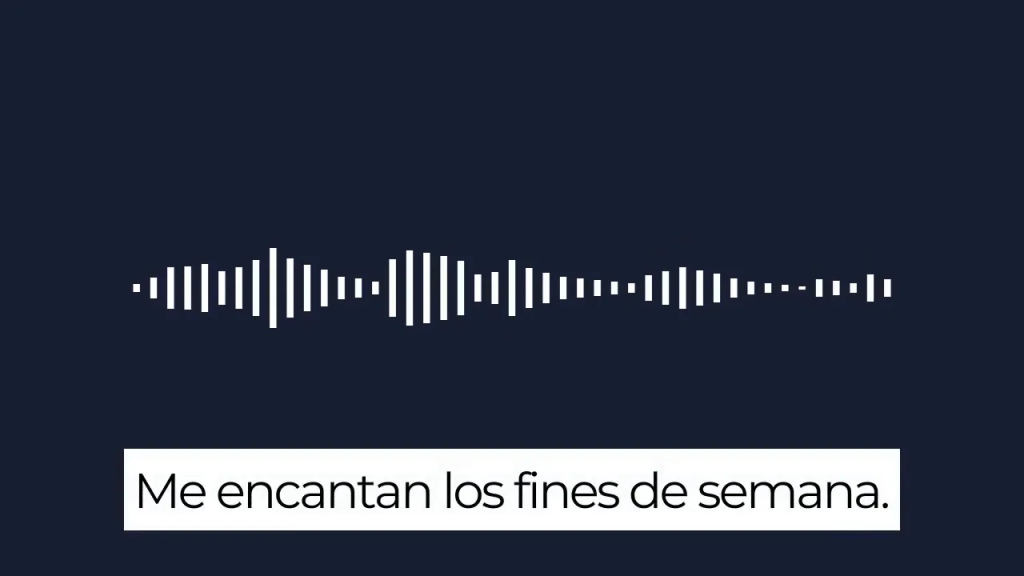
- gustar / encantar — to like / to love (works with indirect object pronouns). Example: Me encantan los fines de semana. (I love weekends.)
- empezar — to start. Example: Las clases empiezan a las nueve. (Classes start at nine.)
- terminar — to finish. Example: La clase termina a las once. (The class ends at eleven.)
Quick note on gustar and encantar
These verbs use indirect object pronouns: me, te, le, nos, os, les. The verb agrees with the thing liked, not the person. For example:
- Me encantan los fines de semana. (I love weekends.) — encantan agrees with los fines de semana.
- Me gusta descansar. (I like to rest.) — gusta agrees with the activity descansar.
Me encantan los fines de semana. Me levanto tarde y escucho música. Descanso más.
Example sentences you can use right now
These sentences combine school schedule language and weekend vocabulary so you can practise the present tense in practical contexts.
- Mis clases empiezan a las nueve y terminan a las cuatro. (My classes start at nine and finish at four.)
- Los fines de semana me levanto tarde y veo películas en Netflix. (On weekends I get up late and watch movies on Netflix.)
- Durante la semana estudio por la mañana y cocino por la noche. (During the week I study in the morning and cook in the evening.)
- Me gusta visitar museos y hacer viajes a otras ciudades. (I like to visit museums and take trips to other cities.)
- A veces voy a un restaurante el sábado. (Sometimes I go to a restaurant on Saturday.)
Grammar tips for school schedules
Keep these points in mind when talking about timetables:
- Use the present tense to express fixed timetables: La clase empieza a las ocho.
- Use time expressions: por la mañana, por la tarde, entre semana, los fines de semana.
- Reflexive verbs for personal routines: levantarse, ducharse, acostarse.
- To explain purpose use para: Cocino para ahorrar tiempo entre semana.
Practice tasks
- Translate into Spanish:
- I wake up late and listen to music.
- I rest more on weekends.
- My classes start at nine and end at three.
- Conjugate the verb descansar in the present tense for all persons (yo, tú, él/ella/usted, nosotros, vosotros, ellos/ustedes).
- Fill in the blanks with the correct present tense form:
- Me ____ (gustar) ver series en Netflix.
- Nosotros ____ (ir) al museo los domingos.
- Ella ____ (estudiar) por la mañana.
- Write a short paragraph (4–6 sentences) in Spanish about your ideal weekend. Use at least three verbs from the key list and the present tense.
- Write two sentences describing your school schedule in Spanish (what time classes start/finish, when you have breaks).
Answer key
Check your answers below. Try first, then look.
- Translations:
- Me levanto tarde y escucho música.
- Descanso más los fines de semana. (or Descanso más el fin de semana.)
- Mis clases empiezan a las nueve y terminan a las tres.
- Descansar — present tense:
- yo descanso
- tú descansas
- él/ella/usted descansa
- nosotros descansamos
- vosotros descansáis
- ellos/ustedes descansan
- Fill in the blanks:
- Me gusta ver series en Netflix.
- Nosotros vamos al museo los domingos.
- Ella estudia por la mañana.
Final tip
Make a habit of writing one short sentence in Spanish about your day every evening. Use the present tense to describe what you usually do. After a week you will see real improvement in fluency and confidence.
Building Proficiency for World Language Learners: 100+ High-Interest Activities
Discover over 100 dynamic activities to make world language learning interactive and fun. I wrote this book with some of my favorite activities for educators aiming to build proficiency with high-impact strategies.
Learn more and get your copy here.
5 Weeks of No and Low Prep Fun
Need quick, engaging activities for your class? This free guide includes 25 no-prep and low-prep ideas to save time while keeping students excited about learning.
Download your free copy now.
100s of Videos to Learn Spanish
Gain access to an extensive collection of videos for self-paced Spanish learning.
Browse the videos.