Sudoku for Verb Practice in Spanish
Sudoku for Verb Practice in Spanish
Sudoku is traditionally known as a logic and number puzzle, but with a few simple modifications it becomes a powerful and engaging tool for Spanish verb practice. Verb Sudoku adds variety to your grammar instruction, reinforces patterns, and encourages students to think critically about conjugations rather than memorizing them in isolation. It works well for warm-ups, stations, early finisher activities, sub plans, or structured practice during a verb unit.
What Is Verb Sudoku?
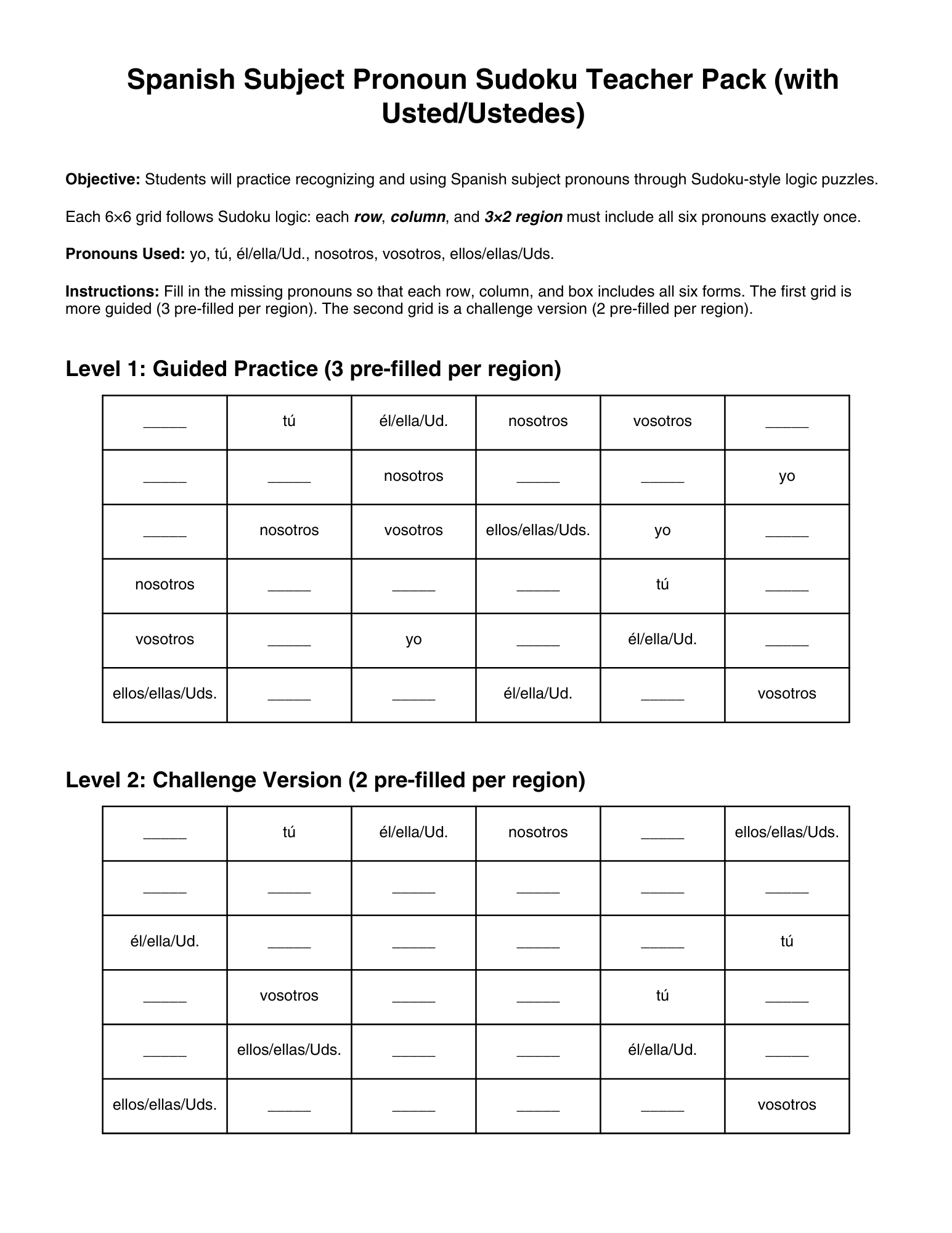
Verb Sudoku replaces numbers with verb forms. Instead of filling in digits from 1 to 9, students fill in conjugations. Depending on the level, you can use:
• Six-square grids for smaller sets of forms
• Nine-square grids for full six-person conjugation charts plus infinitives
• Picture-supported versions for novices
• Thematic verb lists for vocabulary integration
Students must use logic to ensure that each form appears only once in each row, each column, and each sub-grid.
Why Sudoku Works for Verb Practice
Unlike traditional worksheets, Verb Sudoku makes students:
• Analyze conjugation patterns
• Compare forms side by side
• Notice endings and stems
• Slow down and think about accuracy
• Engage with grammar in a puzzle-based format
It promotes problem-solving and metacognitive awareness, which helps students internalize forms more deeply.
How to Set Up Verb Sudoku
- Select a verb or a group of related verbs.
- Create a grid using the forms you want students to practice.
- Pre-fill several squares to create the puzzle’s starting point.
- Leave the remaining spaces blank for students to complete.
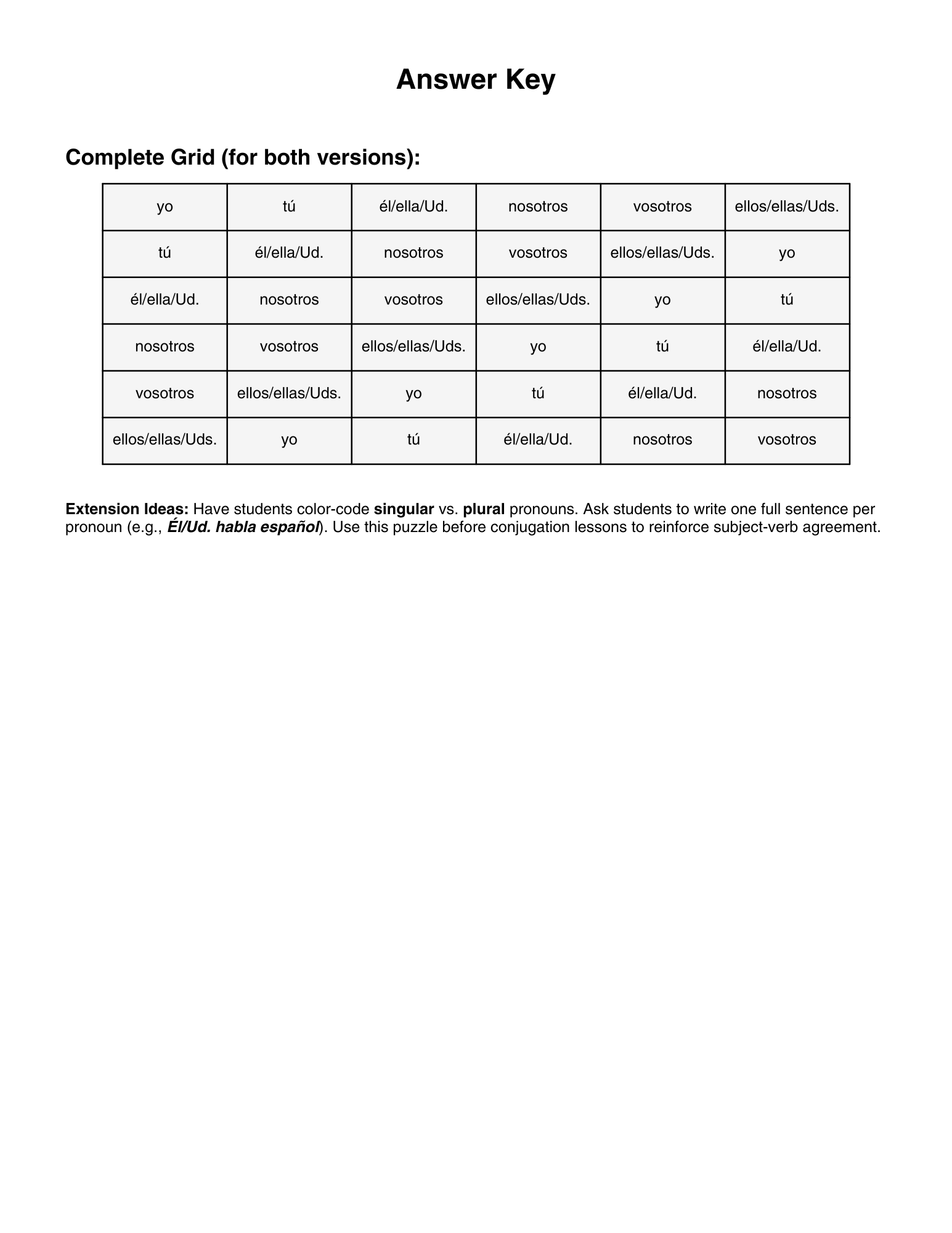
- Provide an answer key for self-checking or pair-checking.
For example, a present-tense –ar puzzle might include:
Yo hablo
Tú hablas
Él/Ella/Ud. habla
Nosotros hablamos
Vosotros habláis
Ellos/Ellas/Uds. hablan
Each form appears exactly once in the final completed grid.
Ideas for Levels and Variations
Beginner:
• Use only three subjects (yo, tú, él/ella)
• Use color-coded charts
• Provide infinitives and have students match a few forms
Intermediate:
• Full present-tense puzzles for –ar, –er, and –ir verbs
• Two-verb puzzles for contrast (e.g., ser vs. estar)
Advanced:
• Preterite or imperfect puzzles
• Command forms
• Subjunctive mood puzzles
• Mixed-tense Sudoku for review units
Thematic Variations
To deepen vocabulary connections, choose verbs from specific units such as:
• School
• Home and chores
• Weather
• Travel
• Daily routines
• Sports
This turns the puzzle into both a grammar and a thematic vocabulary review.
How to Use Verb Sudoku in Class
• Warm-up for a verb lesson
• Quick formative assessment
• Partner puzzle race
• Station activity
• Homework with optional challenge versions
• Early finisher task bin
• Sub day activity that requires no teacher input
Final Thoughts
Verb Sudoku is a flexible, meaningful, and highly engaging alternative to traditional conjugation practice. It encourages students to slow down, apply logic, and see verb endings as patterns rather than memorized lists. Whether you use it once a semester or integrate it regularly into your instruction, it offers a valuable way to strengthen accuracy and confidence with Spanish verbs.
Building Proficiency for World Language Learners: 100+ High-Interest Activities
Discover over 100 dynamic activities to make world language learning interactive and fun. I wrote this book with some of my favorite activities for educators aiming to build proficiency with high-impact strategies.
Learn more and get your copy here.
5 Weeks of No and Low Prep Fun
Need quick, engaging activities for your class? This free guide includes 25 no-prep and low-prep ideas to save time while keeping students excited about learning.
Download your free copy now.